
BNB
KLEAR3 ResearchPublished Updated
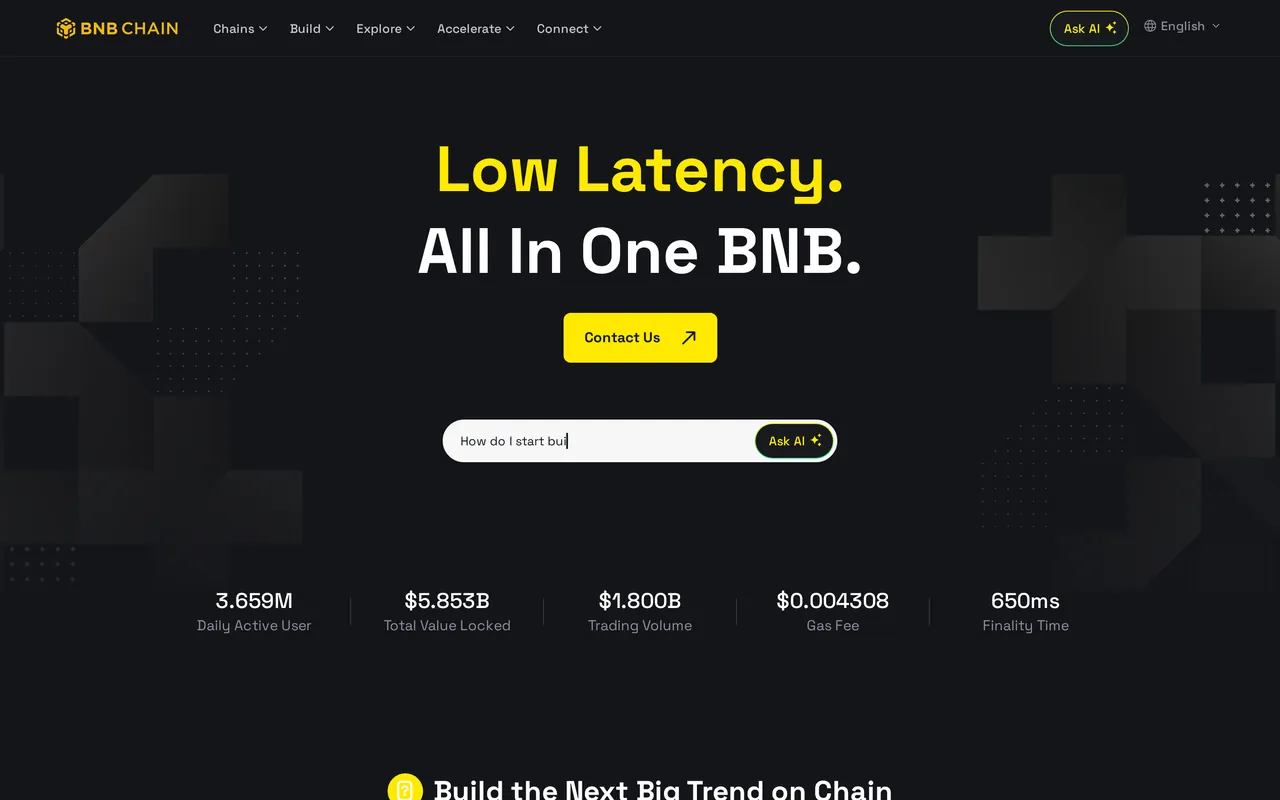
BNBBNB, the token of a chain launched by the largest crypto exchange, is the fourth largest holding in this ranking. Its chain is a fork of Ethereum’s best known client, and the repository the main data aggregator links to is not the chain at all.
What does BNB actually do?
BNB pays fees on a chain built to be cheap and fast, and it started life as a token of the exchange that created it. Both halves matter: it is infrastructure and a company asset at once, which is unusual in this top ten.
The chain runs programs the way Ethereum does, and cheaply enough that a transaction costs cents rather than dollars. That is the whole appeal, and it is bought with a trade: fewer validators, chosen differently, which is a different balance between speed and how many independent parties must agree.
What makes BNB unlike the network its software was forked from is not technical. It is that one company launched it, holds the brand and runs the exchange where most of it trades. Nothing in the code enforces that arrangement, and nothing hides it either.

A reader deciding what to make of it should therefore weigh the same question as for a dollar token: how much depends on one organisation continuing to operate, and what would remain if it stopped.
Source GitHub, read 2026-08-25
Is the code actually open?
Yes, under LGPL-3.0, with 131 published versions. But the repository that the main aggregator lists for BNB is the exchange API documentation, not the chain. Anyone following that link to read the code lands somewhere else entirely, and nothing on the page says so.
This is worth spelling out because it is invisible to the reader it misleads. The aggregator names three repositories: API documentation and two client libraries for the trading platform. The software that actually produces blocks, the client the network runs on, is not among them.
We point at the real one, and it describes itself plainly as a client based on a fork of go-ethereum. That is a fact worth having: BNB inherits fifteen years of work done elsewhere, which is both a strength and a dependency.
The same class of error affects two other entries here. Both XRP and USDC are listed with repository addresses that now answer with a permanent redirect. Nobody checks these links once they are published.


Source CoinGecko / GitHub API, read 2026-08-25
No audit covers the code specific to BNB Chain. The 4 reports in its client's audit folder are go-ethereum's, inherited with the fork. We searched elsewhere, in the public indexes of 20 firms and beyond: no firm has published a review of this client.
Source 0xNazgul/Blockchain-Security-Audit-List, read 2026-08-26
Is anyone still working on it?
Yes, at a steady rather than frantic pace. The client took 84 commits from 9 distinct Git identities over the 90 days to 25 August 2026, with the last one on 13 August. That is well below Bitcoin and Solana, and comfortably above nothing.
Nine identities is the number worth pausing on. It is the smallest development group of any chain in this top ten that we counted, and a small group is a concentration of knowledge as much as a sign of focus. Which of the two it is here, we did not establish.
The count is exact rather than capped: 84 sits below the hundred-object page limit, so unlike the busiest repositories here it did not need pagination to be measured correctly.
Source GitHub, read 2026-08-25
What shows it is running
- The network answers — block 118,055,847
- The client is still being worked on — 84 commits over the 90 days to 2026-08-25, 9 distinct Git identities
Source bsc-rpc.publicnode.com · GitHub, read 2026-08-25
- The token is issued
- The chain client goes public
Where does it actually run?
On its own chain, which we checked answers: a public node returned block 118 055 847 on 25 August 2026. The token also exists as a contract on Ethereum, so the same name refers to two different things depending on where you hold it.
That duplication is worth knowing before moving any. The chain version and the Ethereum contract are not interchangeable, and a transfer between them needs a bridge, not an address. It is the same trap that multi-chain dollar tokens set for beginners, with fewer chains involved.

Source bsc-rpc.publicnode.com, read 2026-08-25
Network verified by reading its current block height on a public node.
What the token actually does
It pays transaction fees on the chain and carries whatever the exchange chooses to attach to it. Supply is capped at 200 million, of which about two thirds are in circulation, and we did not establish how the remainder is held.
The cap is real and reported by the aggregator: 200,000,000 maximum against 133,162,835 circulating. That gap of roughly a third is the figure a reader should want explained, and this page does not explain it, because we did not measure it.
The opposite case sits on this list too: a chain whose issued supply circulates almost in full. Either way the number is easy to read and its meaning is not.
- In circulation133,162,835
- Not yet issued, up to the cap66,837,165
- What the token is forDirectly verified
- How many existThird-party supported
- How new ones appearNot verified
- Who can change the rulesNot verified
The KLEAR3 rating
3out of 5 in the KLEAR3 rating
Each axis gets 0 to 5 from the facts in the register, against thresholds written in advance. The overall score is their weighted average, and it only appears once at least 5 of the 6 axes rest on a measured fact.
- Audits ×1.3
- Open code ×1.2
- Business model ×1.1
- Token alignment ×1
- Governance ×1
- Maturity ×0.7
- Open code5
public repository · LGPL-3.0 licence · 131 published releases · 84 commits in 90 days
- Audits0
absence searched for: 20 firm indexes swept, 3,573 reports, none commissioned by the project
What holds it back 4 reports in the repository, all inherited from the upstream code, the most recent dated 2020-01-24 — none covers this chain · no report opened: we do not know what they found
- Business modelnot measured
What holds it back business model not established from a primary source
- Governance5
decided by a public proposal process (BEP), with no vote · 116 improvement proposals published · process open for 7 years
- Token alignment2
supply capped at 200 million · 67% already in circulation
What holds it back emission schedule unknown
- Maturity4
6 years of public code · 1 network verified by us
We rate the protocol: how it is built, how much of it can be checked, how its token lines up. Never an investment. A high score is not advice to buy, and a low one is not advice to sell.
What we could not establish
Governance and where the non-circulating third of the supply sits. We read the client repository and the chain, not the arrangements around them, and we do not describe what we have not opened. The governance question weighs more here than the code does.
The governance question matters more here than on most entries, because the chain and the exchange share an origin. Who decides on protocol changes, and under what constraint, is exactly what a reader would want, and it is what we left unopened.
Frequently asked questions
Why do data sites link the wrong repository for BNB?
We can report the fact and not the cause. The aggregator lists API documentation and two client libraries for the exchange, and does not list the chain client at all. A reader following those links to inspect the code reads something unrelated.
The reason it survives is that nobody rechecks a link once it is published. The three addresses answer normally, contain real code, and belong to the same organisation, so nothing looks broken. That is precisely what makes the error last, and why we measured the contents instead of the name.
Two other entries in this same top ten carry repository links that now answer with a permanent redirect. That is three of ten with a stale or wrong code link on the largest crypto data site, which is worth knowing before treating such a link as evidence.
Is BNB a copy of Ethereum?
Its client is a fork of go-ethereum, which the repository states in its own description. That means it inherits the design and much of the code, and then diverges in how blocks are produced and how many parties take part.
Forking is normal and not hidden here. What it means practically is that work done on the original benefits both, and that a serious flaw in the shared parts would concern both as well. Forking is not copying: it is inheriting, with the maintenance attached, and here it is stated openly rather than buried.
The divergence is where the trade sits: fewer validators makes transactions cheap and fast, and reduces the number of independent parties who must agree. Neither arrangement is the correct one; they answer two different questions about trust.
What happens to BNB if the exchange stops operating?
We did not establish that, and it is the right question to ask. The chain is software run by validators, so it does not depend on any one company to produce blocks. The token’s value, its listings and its uses are a separate matter.
What can be said from measurement is narrow: the chain answers, the client is public, and the code carries an open licence. Those three facts survive any single organisation, because none of the three depends on one. What would not survive is harder to name, and this page does not pretend otherwise: liquidity, listings and the market’s confidence all sit outside the code.
What we did not read is the governance: who may change the rules, who selects validators, and under what constraint. Until that is opened, this page will not guess at it.
Read next: our Solana profile shows another chain that chose speed, and our Hyperliquid profile shows what happens when the same trade is made without publishing the code.


Ask an assistant to summarise it and check what it claims.